
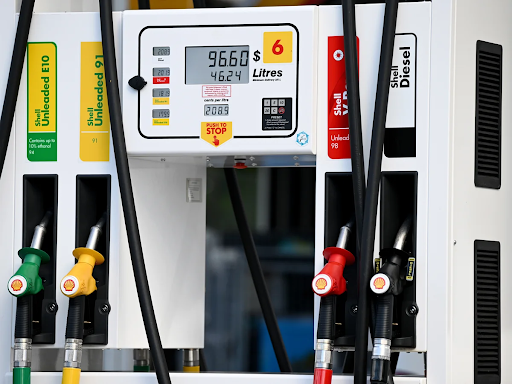
Cost of travelling to work : —have you looked at the bowser lately? If you felt a sharp pain in your chest (and your wallet) while filling up this morning, you’re definitely not alone. Australia is currently in the grip of a fuel fever that’s pushing everyday workers to the absolute edge.
We aren’t just talking about a few extra cents here and there. We are talking about petrol prices smashing through the $2.50 mark and, in places like Fowler, hitting a staggering $3.15 per litre. It has reached a point where the math just doesn’t add up anymore. For thousands of Australians, the cost of getting to work is officially higher than the benefit of the shift itself.
The “Great Resignation” has taken a sharp, angry turn into the “Great Commute Strike.
The Math of Misery: Why Work Doesn’t Pay
Imagine waking up, driving 40 minutes to a job that pays a decent wage, only to realize that after you’ve paid for fuel, tolls, and parking, you’ve basically worked the first two hours of your day for free.
That is the reality for “Emma,” a retail worker in Sydney who recently went viral for explaining why she handed in her notice. “By the time I fill my tank twice a week just to get to the shopping centre and back, I’m down nearly $250. That’s my grocery budget. I’m literally paying to go to work,” she shared.
And she’s not the only one. Social media is currently a flood of “Aussie Rage” as people calculate their “Work-to-Fuel” ratio.
- The $200 Club: Commuters in outer-suburban areas (where public transport is a myth) are reporting weekly fuel bills exceeding $200–$300.
- The Toll Trap: Add Sydney or Brisbane tolls to that fuel bill, and you’re looking at a financial disaster.
- The Regional Struggle: In country towns, where the next petrol station is 50km away, the $3/litre price tag is more than a headline—it’s a threat to survival.
The “Quit Our Jobs” Movement
The hashtag #QuitOurJobs started trending this week as a desperate cry for help. It isn’t that Australians are lazy—far from it. It’s that we are becoming “economically trapped.”
When the cost of living—specifically fuel—skyrockets, the workforce starts to shift. We are seeing a massive surge in:
- Job Hugging: People are terrified to leave stable roles, but they are also refusing to travel for them.
- The WFH Ultimatum: Office workers who were being forced back to the city are now telling bosses: “Either I work from home, or I quit.
- Local Only: A “5km Radius” job search is becoming the new norm. If it’s not within walking distance or a short bus ride, it’s not worth the petrol.
Why Is This Happening? (The Global Chaos)
You might be wondering, “Why now?” While we’d love to blame a single person, the 2026 fuel crisis is a perfect storm of global drama.
- Middle East Tensions: Ongoing conflicts have choked off supply lines, making crude oil more expensive than ever.
- Supply Chain Snaps: We still haven’t fully recovered from the logistics nightmares of the last few years.
- The “April Fool’s” Relief: While the government has promised to halve the fuel excise (dropping it by about 26 cents) starting April 1st, many Aussies feel it’s “too little, too late.” 26 cents doesn’t mean much when the price has already jumped $1.00 in a month.
How Aussies Are Fighting Back
Australians are famous for their “mate-ship” and ingenuity, and we are seeing some pretty creative (and desperate) ways to beat the pump
- The Rise of the E-Bike: Sales of electric bikes and scooters have exploded as people ditch the Holden for a battery-powered commute.
- Public Transport Resurgence: Even the most die-hard car lovers are now squeezing onto trains. Myki and Opal card “tap-ons” are at record highs for 2026.
- Carpooling Apps: Remember carpooling? It’s back. Apps that connect coworkers living in the same suburb are seeing a 40% uptick in users.
- The “School Camp” Crisis: It’s not just workers. Even schools are cancelling camps because the cost of hiring a diesel bus has become astronomical.
The Government’s Response: Is It Enough?
Prime Minister Anthony Albanese recently announced a four-point plan to manage the “National Fuel Security Crisis.” The headline act? A temporary cut to the fuel excise.
But is a three-month discount really the answer? Economists warn that as soon as that discount ends, we will hit a “price wall.” Unless there is a structural change—like massive investment in EV infrastructure or a permanent fix for public transport in the suburbs—Aussies will keep raging.
What Can You Do? (Survival Tips for 2026)
If you’re feeling the pinch, here are a few ways to keep your head above water while fuel prices are in the stratosphere:
- Fuel Apps Are Your Best Friend: Use apps like GasBuddy or the 7-Eleven Fuel Lock to find the cheapest litre in your area. Even a 5-cent difference adds up on a 60-litre tank.
- Negotiate Your Commute: If your boss wants you in the office, ask for a “Fuel Subsidy” or an extra WFH day to offset the cost. Many companies are desperate to keep staff right now and might actually say yes.
- Check Your Tires: It sounds basic, but under-inflated tires can increase fuel consumption by up to 3%. In this economy, every drop counts.
- Consider the “Side Hustle”: Sadly, many Aussies are taking on second jobs just to pay for the fuel to get to their first job. If you do this, look for remote-based gig work (transcription, virtual assistant, etc.) so you don’t add to your travel bill.
The Bottom Line
Australia is at a breaking point. When a nurse, a teacher, or a retail worker can’t afford the petrol to get to their shift, the whole system starts to wobble. We aren’t just “complaining” about prices; we are fighting for the right to work without going broke.
Will prices drop? Hopefully. But until then, expect to see more empty desks, more bikes on the road, and a whole lot more #AussieRage online.
Leave a Reply